

Pipe counting on conveyors
Counts pipes and tubes as they leave the line, lot by lot.
In daily use at a manufacturing plant, Thailand
The problem
Pipes and tubes are counted by eye as they come off the conveyor. When the count drifts, lots go out short or over-filled, and nobody finds out until the customer does.
How it works
01
Camera over the conveyor
02
Detect, track and count
03
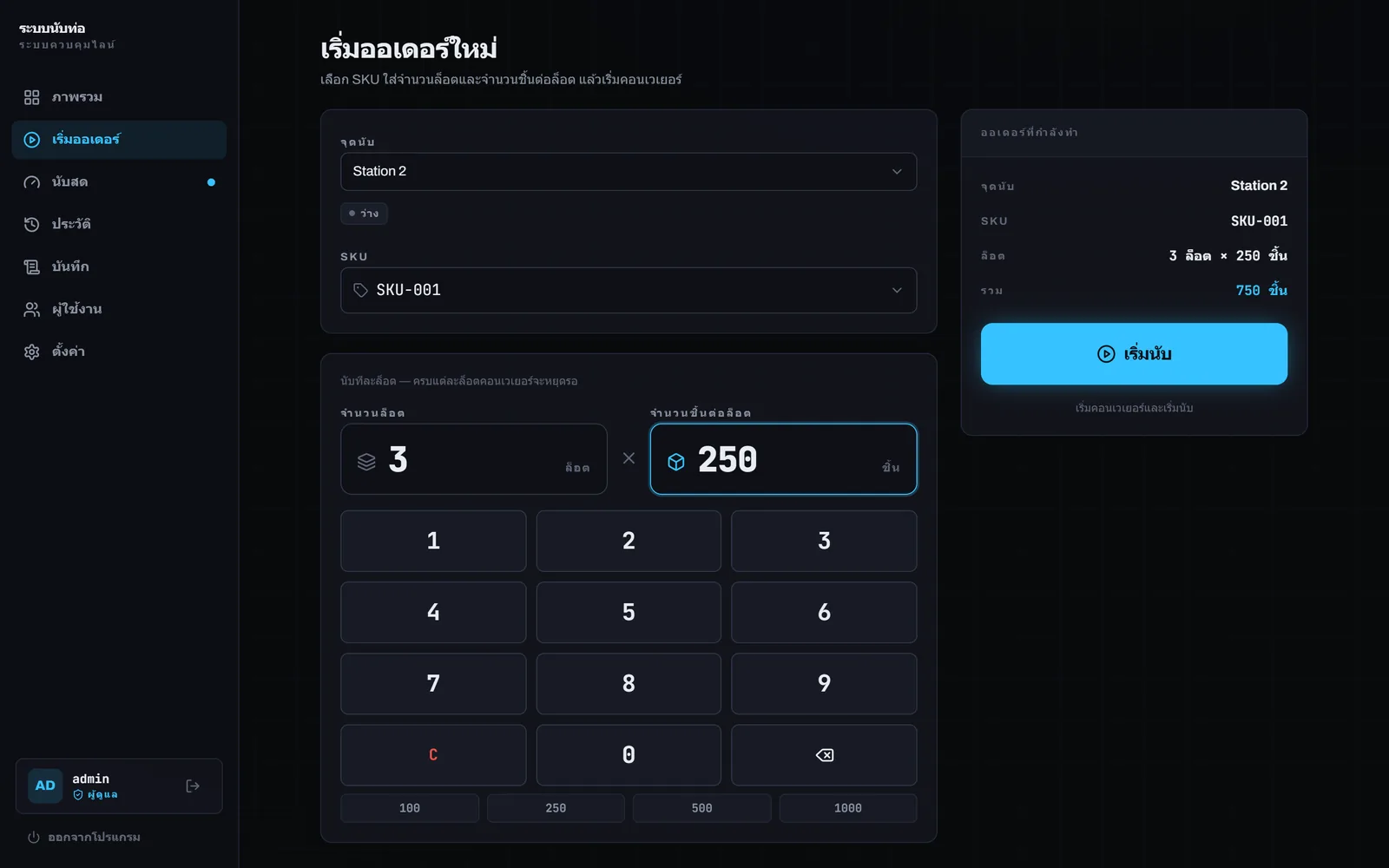
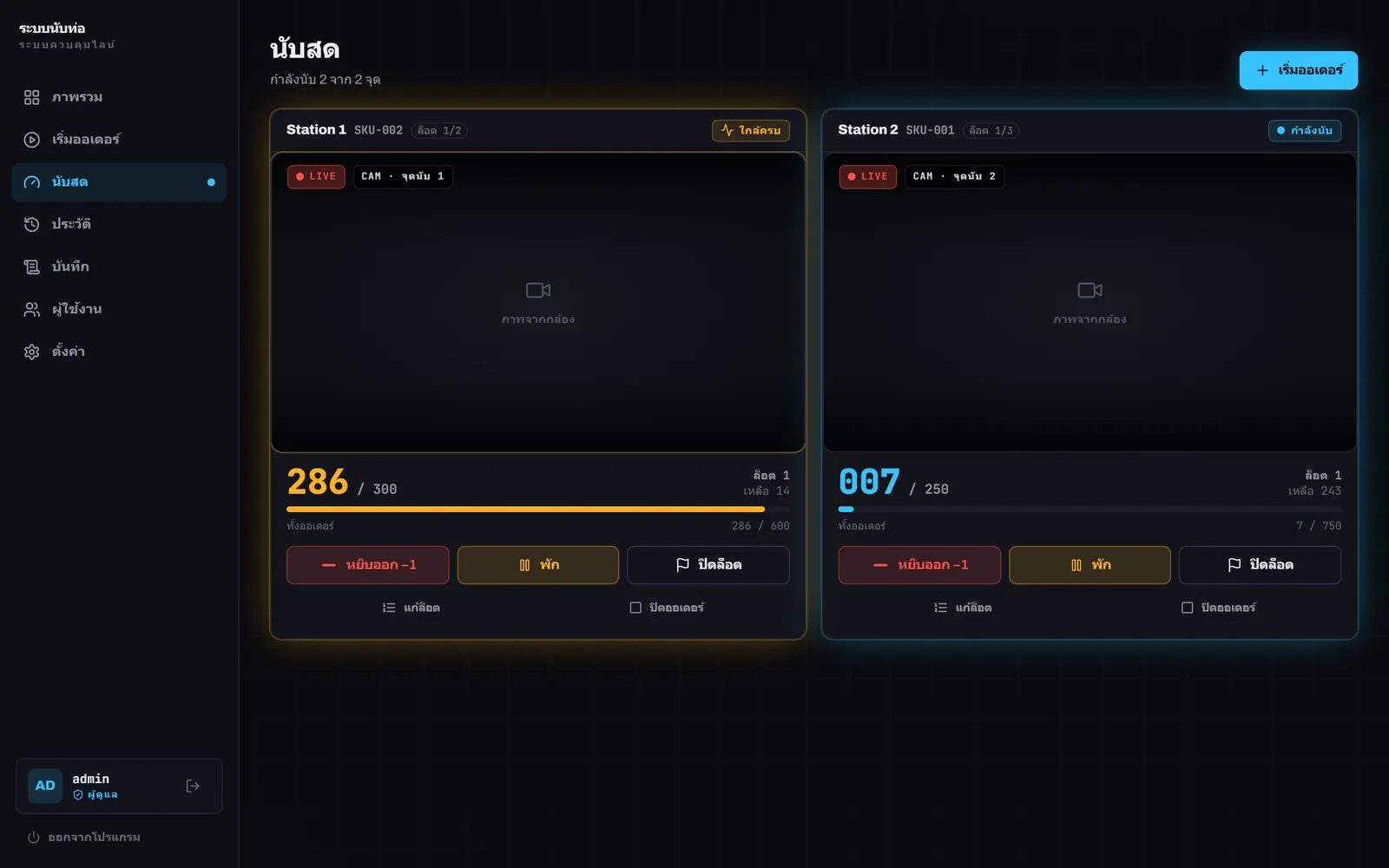
Live count on the touch screen
04
Chime and stop the conveyor
- 1
One IP camera watches the conveyor.
- 2
A detector trained on the plant's own footage, with a tracker, runs on an on-site PC with an NVIDIA GPU and counts each piece that crosses a line in the picture.
- 3
A Thai touch-screen panel shows the live count against the lot target and chimes when a lot is full.
- 4
When a lot is full, or if the camera feed drops, it stops the conveyor through a relay wired to the line's existing START/STOP buttons.
- 5
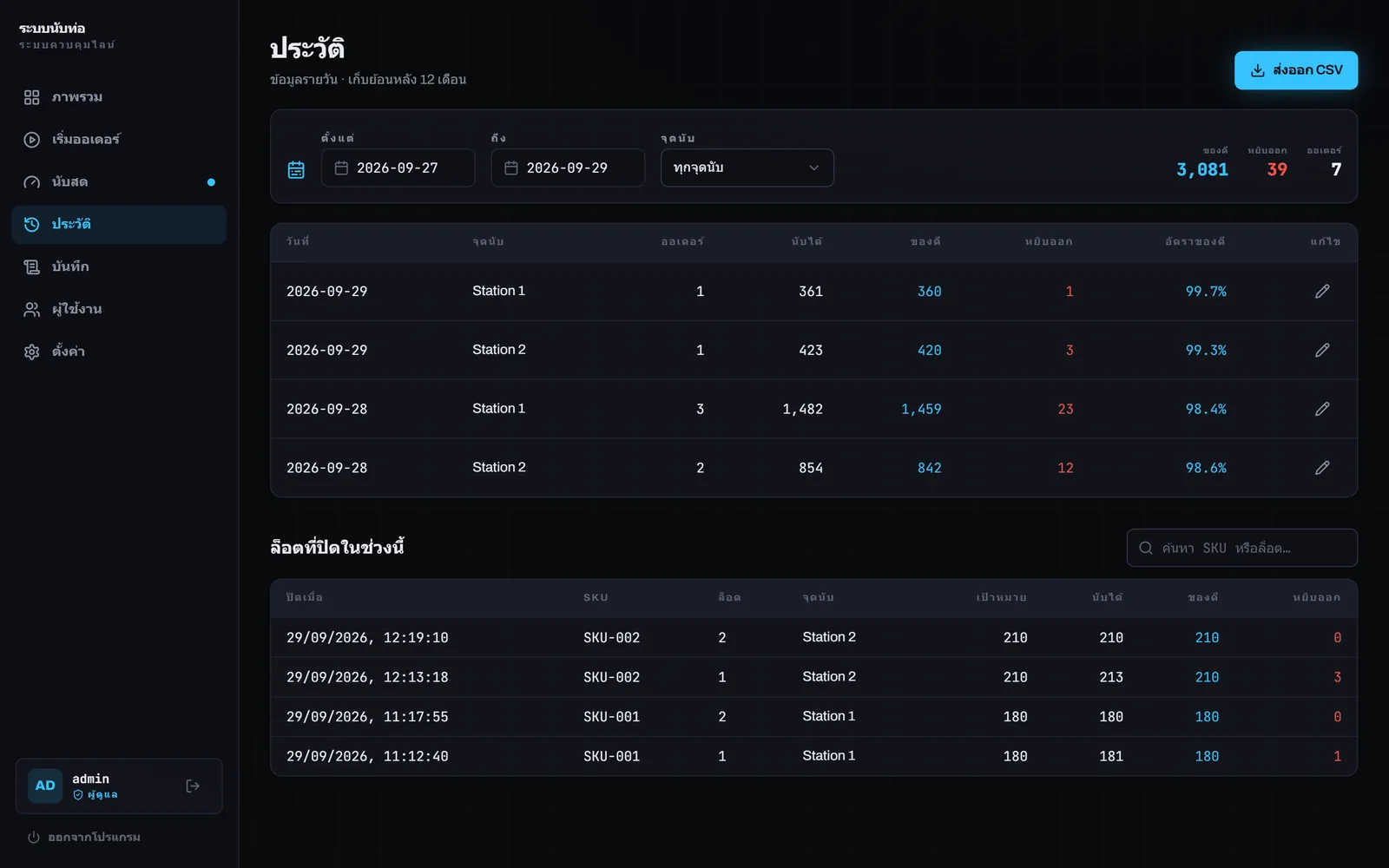
Every count is recorded for daily reports and CSV export.
- 6
The plant's own buttons and emergency stop keep working as before.
Measured results
- counted vs. true count
- 92 / 91
- 5½-minute reference recording, counted end to end by the production service.
- per frame
- 9.6 ms
- Detection and tracking, on the same recording.
- on one PC
- 4 lines
- 4 camera streams at about 13 frames per second each, at 35% GPU load.
- runs fully on-site
- Offline
- No internet connection is needed to count.
What the operator sees
What's needed on site
- PoE IP camera and PoE switch
- Windows PC with an NVIDIA GPU (one PC serves up to 4 lines)
- Touch screen at the line
- Network relay, for conveyor stop and start
Every system is trained on footage from your own site before it goes live.
Want to see it on your line?
Other solutions
- Meter reading from camerasReads mechanical meters from the cameras already pointed at them.
- Container latch checkConfirms all four latches are closed before a container leaves.
- Kit completeness checkChecks every part is in the tray before a kit is packed.
- Forklift aisle warningLights a warning beacon whenever a forklift is in a rack aisle.
- Stockpile volume monitoringEstimates how much sand, gravel and stone is left in each bay.